SEO Isn't Dead - It Just Stopped Being About Clicks (Is SEO Still Worth It in the Age of AI?)
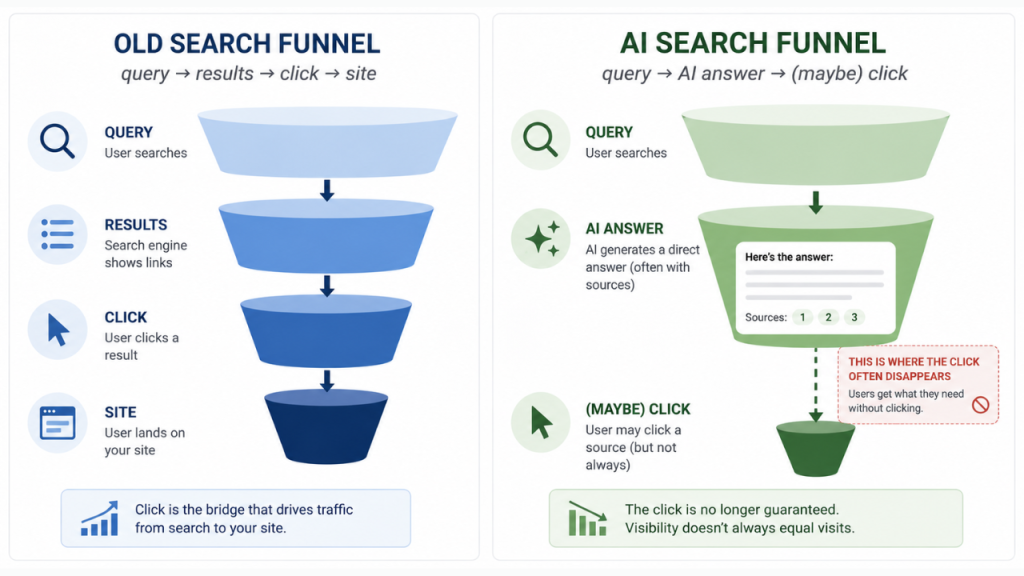
Here’s a number that should rearrange how you think about search: when Google shows an AI summary, people click a source link inside it just 1% of the time, according to a July 2025 Pew Research Center study of 900 U.S. adults. One percent. We spent twenty years building an entire industry around earning that click and the machine quietly made it optional.
So the question everyone keeps asking – “Is SEO still worth it?” – is the wrong question. The honest answer is that SEO is very much alive. It’s the click that’s dying. And once you separate those two things, the entire strategy changes.
The shift is faster than most teams have adjusted to
The same Pew research found people clicked a traditional result 8% of the time when an AI summary appeared, versus 15% when it didn’t — roughly half. Meanwhile, a randomized field experiment by researchers at the Indian School of Business and Carnegie Mellon (reported by Search Engine Journal) found AI Overviews cut organic clicks by 38% on the queries where they show up, pushing zero-click searches from 54% to 72%.
Translation: ranking #1 increasingly means being the answer Google paraphrases for free, not the page someone actually visits. That’s the uncomfortable part most reporting dashboards haven’t caught up to yet.
Four things I'd want every marketer to sit with
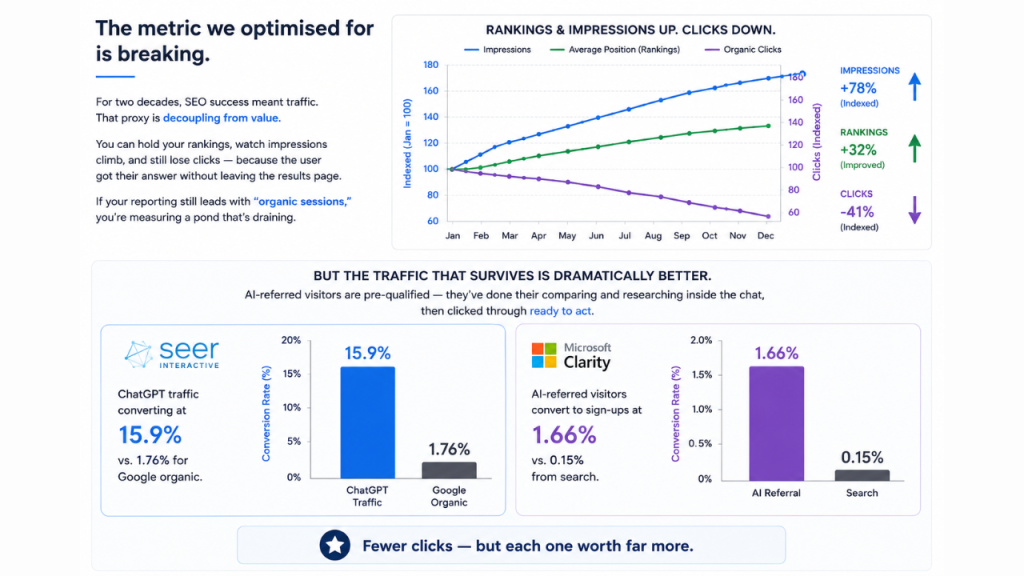
The metric we optimised for is breaking. For two decades, SEO success meant traffic. That proxy is decoupling from value. You can hold your rankings, watch impressions climb, and still lose clicks — because the user got their answer without leaving the results page. If your reporting still leads with “organic sessions,” you’re measuring a pond that’s draining.
But the traffic that survives is dramatically better. This is the part almost nobody expected, and it’s where I tell clients to pay attention. Visitors who do arrive via AI are pre-qualified — they’ve done their comparing and researching inside the chat, then clicked through ready to act. Seer Interactive found ChatGPT traffic converting at 15.9% against 1.76% for Google organic. Microsoft Clarity, analysing more than 1,200 sites (via Digiday), saw AI-referred visitors convert to sign-ups at 1.66% versus 0.15% from search. Fewer clicks — but each one worth far more.
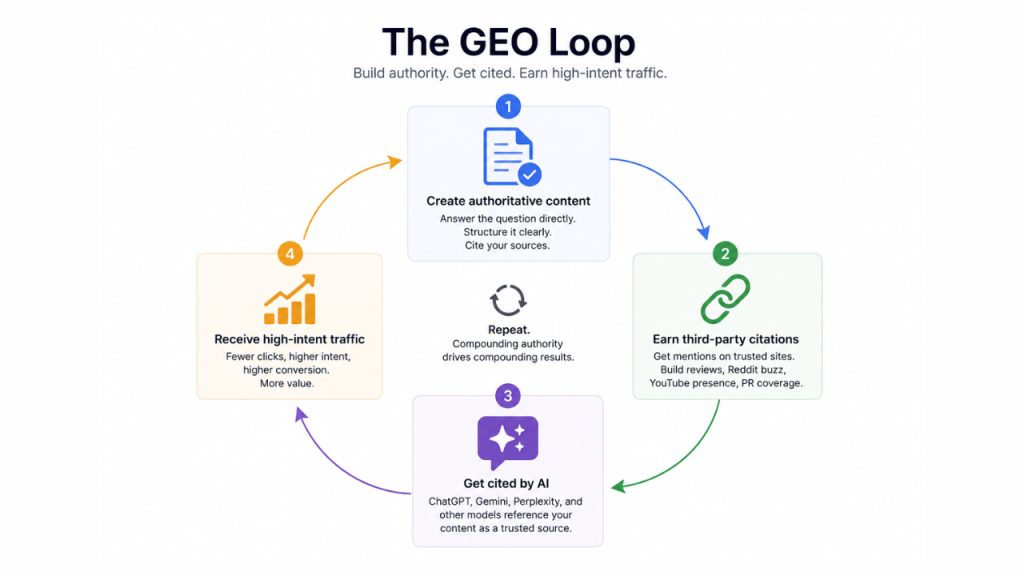
SEO is quietly becoming source optimisation. The new game isn’t ranking to be visited — it’s being the credible source an AI quotes when it answers. That’s a genuinely different discipline: structured, authoritative, verifiably expert content that a model can lift and cite with confidence. The brands winning here aren’t gaming an algorithm; they’re becoming the reference.
The window is wide open. AI referrals are still tiny — roughly 1% of total web traffic, per Conductor’s benchmark data — but growing at triple-digit rates year over year. That gap between “small now” and “growing fast” is exactly where early advantage lives. Most competitors are either ignoring it or panicking. Neither is a strategy.
What to actually do about it
Stop putting traffic at the top of your reports; lead with conversions and AI citations instead — track whether ChatGPT, Gemini, and Perplexity mention you, not just whether Google sends visitors. Write to be quoted: open with the direct answer, structure content cleanly, cite your sources, and make every claim verifiable, because machines reward clarity and credibility. Protect your branded and bottom-funnel pages, which convert well and are far less exposed to summary cannibalisation than top-funnel “what is X” content. And build authority off your own site — earned mentions, reviews, Reddit, YouTube — since that’s where AI models look when deciding whom to trust.
Where this goes next
Over the next three to five years, I expect Generative Engine Optimisation to mature from buzzword into a core competency that sits beside traditional SEO rather than replacing it. The risk is real for businesses that monetise raw traffic — publishers most of all. But for anyone selling a product, a service, or expertise, this is arguably a better world: less noise, higher intent, and a real premium on actually knowing your subject.
SEO isn’t worth less in the age of AI. It’s worth differently. The brands that grasp that distinction early won’t just survive the shift — they’ll quietly own the answers everyone else is still competing to appear inside.
Aamir Jolly is a digital marketing strategist and trend forecaster with 8+ years of experience across SEO, AI-powered marketing, content strategy, paid media, and business growth, working with local and international clients.
Sources & Further Reading
- Pew Research Center — https://www.pewresearch.org/short-reads/2025/07/22/google-users-are-less-likely-to-click-on-links-when-an-ai-summary-appears-in-the-results/
- Search Engine Journal (ISB / Carnegie Mellon field experiment) — https://www.searchenginejournal.com/ai-overviews-cut-organic-clicks-38-field-study-finds/573145/
- Seer Interactive (ChatGPT vs. organic conversion case study) — https://www.seerinteractive.com/insights/case-study-6-learnings-about-how-traffic-from-chatgpt-converts
- Digiday (Microsoft Clarity AI referral data) — https://digiday.com/media/in-graphic-detail-the-state-of-ai-referral-traffic-in-2025/
- Similarweb (Generative AI / GEO benchmarks, incl. Conductor data) — https://www.similarweb.com/blog/marketing/geo/gen-ai-stats/